What if your home’s aging exterior is costing you more in hidden energy leaks than a modern upgrade would? Living in Nassau County means your house faces a unique set of challenges, from salt air along the shores to heavy seasonal storms. It’s natural to feel concerned about rising utility bills or the possibility of moisture damage hiding behind old, cracked panels. You want a home that looks pristine and stays protected, but the thought of managing a major construction project often feels overwhelming.
This guide will show you how a professional vinyl siding replacement in Nassau County transforms your property into a high-performance, maintenance-free sanctuary. We’ve been helping local families since 1969, and we know that a beautiful exterior must also be a functional one. You’ll discover how to achieve a sophisticated wood-grain aesthetic that never needs painting, while significantly improving your home’s insulation and R-value. We will also walk you through the 2026 design trends and the essential steps for navigating local building permits, ensuring your project is as stress-free as it is rewarding.
Key Takeaways
- Learn to spot the subtle signs of coastal UV damage and trapped moisture before they affect your home’s structural integrity.
- Discover how a professional vinyl siding replacement in Nassau County boosts your home’s R-value and slashes monthly energy costs.
- Compare the weight and maintenance benefits of modern vinyl against fiber cement to choose the best fit for your property.
- Navigate the local building permit process with ease by partnering with a seasoned professional who understands Nassau’s specific regulations.
- Explore the latest 2026 design trends, including bold colors and vertical styles that provide a high-end wood look without the upkeep.
Signs Your Nassau County Home Needs Siding Replacement
Your home’s exterior serves as a vital protective envelope. Over time, the unique environmental pressures in Nassau County can compromise that shield. Recognizing the early indicators of failure allows you to plan for a Vinyl siding upgrade before minor issues escalate into costly structural repairs. A home that has lost its luster often hides deeper functional problems that impact your comfort and your wallet.
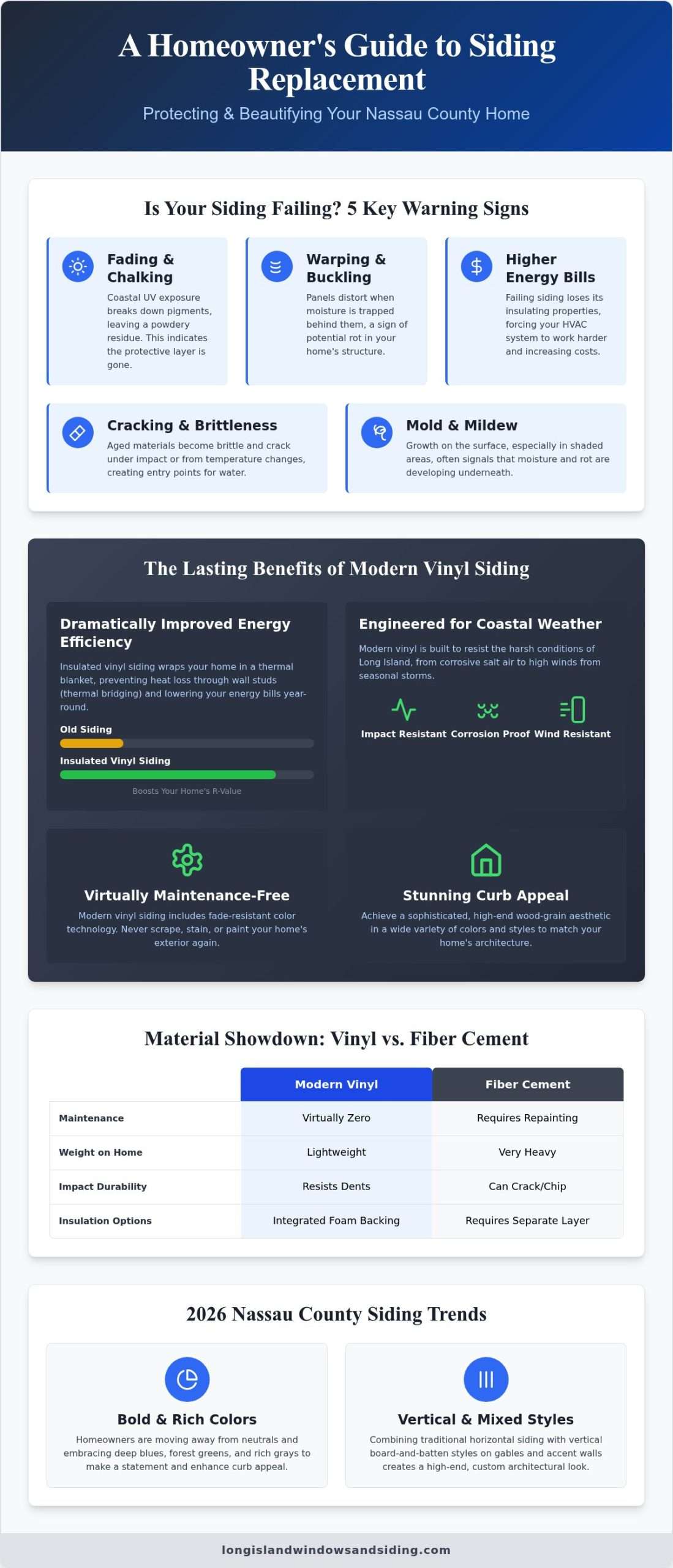
One of the most obvious signs is persistent fading or “chalking.” This occurs when intense coastal UV exposure breaks down the pigments in older materials. If you run your hand across a panel and it leaves a white, powdery residue, the material’s protective layer is gone. Similarly, warping or buckling panels are more than just an eyesore. They often indicate that moisture is trapped in the substrate, causing the panels to expand and distort. This trapped water can quickly lead to rot in the wooden frame of your house.
You might also notice a sudden increase in heating or cooling costs for your Hempstead or Oyster Bay home. When siding loses its ability to insulate, your HVAC system works harder to maintain a steady temperature. If you find yourself frequently repainting or performing constant maintenance on older wood or metal cladding, it’s a clear signal that the material has reached the end of its functional life. Modern solutions eliminate this cycle of endless repairs.
Coastal Weather Impact on Long Island Siding
The geography of Nassau County presents specific challenges for home exteriors. Salt air from the Long Island Sound is highly corrosive, often accelerating the degradation of older, non-vinyl materials. Atlantic storm seasons bring wind-driven rain that can force water into tiny gaps around windows and corners. On the North Shore, heavily shaded areas are particularly prone to high humidity, which creates a breeding ground for mold, mildew, or fungus. These biological growths aren’t just surface stains; they often signal that wood rot is developing behind the old panels.
The “Tap Test” for Hidden Structural Damage
Identifying damage isn’t always a visual process. You can perform a simple “tap test” to check the health of your home’s sheathing. Gently tap on various sections of your exterior with a screwdriver handle. A healthy wall sounds solid and firm. If you hear hollow sounds or feel soft spots, it’s a strong indication of rot or pest damage beneath the surface. You should also look for “bubbling” under the surface of the vinyl. This is a telltale sign that water is trapped and the material is separating from the wall. Ignoring these small cracks or soft spots leads to expensive framing repairs later. Investing in a professional vinyl siding replacement Nassau County ensures that these hidden issues are identified and corrected, providing a fresh, secure foundation for your home’s new look.
Benefits of Modern Vinyl Siding for Long Island Homes
Modern vinyl siding has undergone a massive technological transformation. It is no longer the thin, brittle material of decades past. Today, high-performance PVC cladding is engineered specifically for thermal resistance and extreme impact durability. For homeowners considering a vinyl siding replacement Nassau County, this means investing in a material that stands up to the rigors of our coastal environment while maintaining its pristine appearance for years. These advanced systems provide a robust shield that protects your home’s structure from the elements while significantly reducing the time and money spent on exterior upkeep.
Living on an island means facing intense weather patterns. Modern siding panels are now designed with superior wind resistance ratings, capable of withstanding gusts exceeding 100 mph. This level of protection is vital for homes near the South Shore or overlooking the Sound. Additionally, vibrant color retention technology ensures your home resists the fading effects of harsh sun and corrosive salt air. The result is a vibrant, fresh look that lasts without the need for scraping or repainting. If you are looking to revitalize your property, you can explore our high-end siding options to see these benefits in person.
Energy Efficiency and R-Value Improvements
One of the most significant advantages of modern installation is the use of contoured foam backing. This insulation acts as a thermal blanket for your home, wrapping it in a layer of protection that traditional siding lacks. Most heat loss occurs through “thermal bridging,” where energy escapes directly through the wooden wall studs. By adding a layer of insulated siding, you break that bridge and keep your climate-controlled air where it belongs. This upgrade works in tandem with other efficiency measures, such as energy efficient windows Nassau County homeowners often install to lower their monthly utility bills. According to standards set by the Vinyl Siding Institute, these materials must meet strict performance criteria to ensure long-term energy savings.
Architectural Versatility: From Cape Cod to Colonial
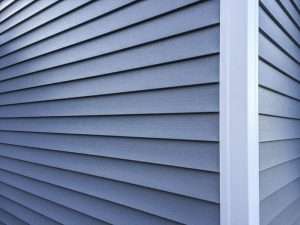
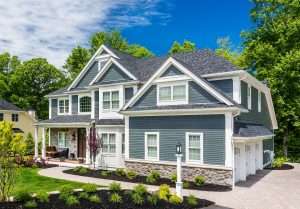
Nassau County is home to a beautiful array of architectural styles. Whether you own a classic Cape Cod in Levittown or a sprawling Colonial in Garden City, modern vinyl can be tailored to match your home’s unique character. The industry has moved far beyond a “plastic” look, now offering authentic wood grain finishes and deep, rich textures. You can choose from various profiles to elevate your curb appeal:
- Cedar-Shake Vinyl: Provides the rustic charm of real wood without the risk of rot or insect damage.
- Dutch Lap: Creates traditional horizontal lines with distinct shadow effects for a classic aesthetic.
- Board and Batten: Delivers a modern farmhouse look with striking vertical lines that add height and interest.
These diverse styles allow you to customize your home’s exterior to reflect your personal taste while enjoying the durability of a professional vinyl siding replacement Nassau County. The transformation is immediate, turning an aging facade into a neighborhood standout with minimal effort.
Vinyl vs. Fiber Cement: Which is Right for Nassau County?
Deciding between these two cladding materials often comes down to balancing your long-term lifestyle goals with your home’s structural needs. For a vinyl siding replacement Nassau County project, the decision impacts everything from your installation timeline to your weekend chores. While fiber cement offers a heavy, masonry-like feel, modern vinyl has evolved to provide a nearly identical aesthetic with a much lighter physical and financial footprint. We believe in providing solutions that respect both the heritage of your home and the reality of your schedule.
Weight is a critical consideration often overlooked by homeowners. Many historic homes in neighborhoods like Mineola or older structures in Huntington Station were not originally engineered to support the significant weight of cement-based boards. Vinyl is exceptionally lightweight, ensuring that your home’s frame isn’t under unnecessary stress. Additionally, the installation process for vinyl is significantly faster and less intrusive. Because the material is easier to cut and handle, professional crews can often complete a full transformation in a fraction of the time required for fiber cement. This efficiency minimizes the disruption to your daily routine in busy areas like Babylon or Islip.
Maintenance Requirements Over Time
Vinyl remains the premier “wash and go” solution for active Nassau and Suffolk County families. A simple rinse with a garden hose once or twice a year is usually enough to keep it looking new. In contrast, fiber cement is a porous, cement-based material that requires periodic caulking and repainting to maintain its water resistance. Along the South Shore, where salt spray is a constant factor, paint finishes on cement boards can degrade more quickly. This leads to a cycle of scraping and repainting that many homeowners prefer to avoid. Vinyl holds its color through the entire panel, meaning scratches or salt exposure won’t reveal a different color underneath.
Cost-Benefit Analysis for Local Homeowners
In the competitive New York metro housing market, siding replacement consistently ranks as one of the top home improvements for return on investment. Buyers in communities like Garden City or Smithtown place a high premium on “move-in ready” exteriors that won’t require immediate work. Choosing a high-quality vinyl system provides the look of expensive wood siding without the associated cost or labor. It is a strategic choice for those who want to maximize their home’s value while keeping upfront costs manageable. To ensure you find the right team for the job, consult our Vinyl Siding Contractors: The 2026 Guide. This resource helps you vet local professionals who understand the nuances of Long Island’s diverse architectural styles and climate demands.
The Siding Replacement Process: What to Expect
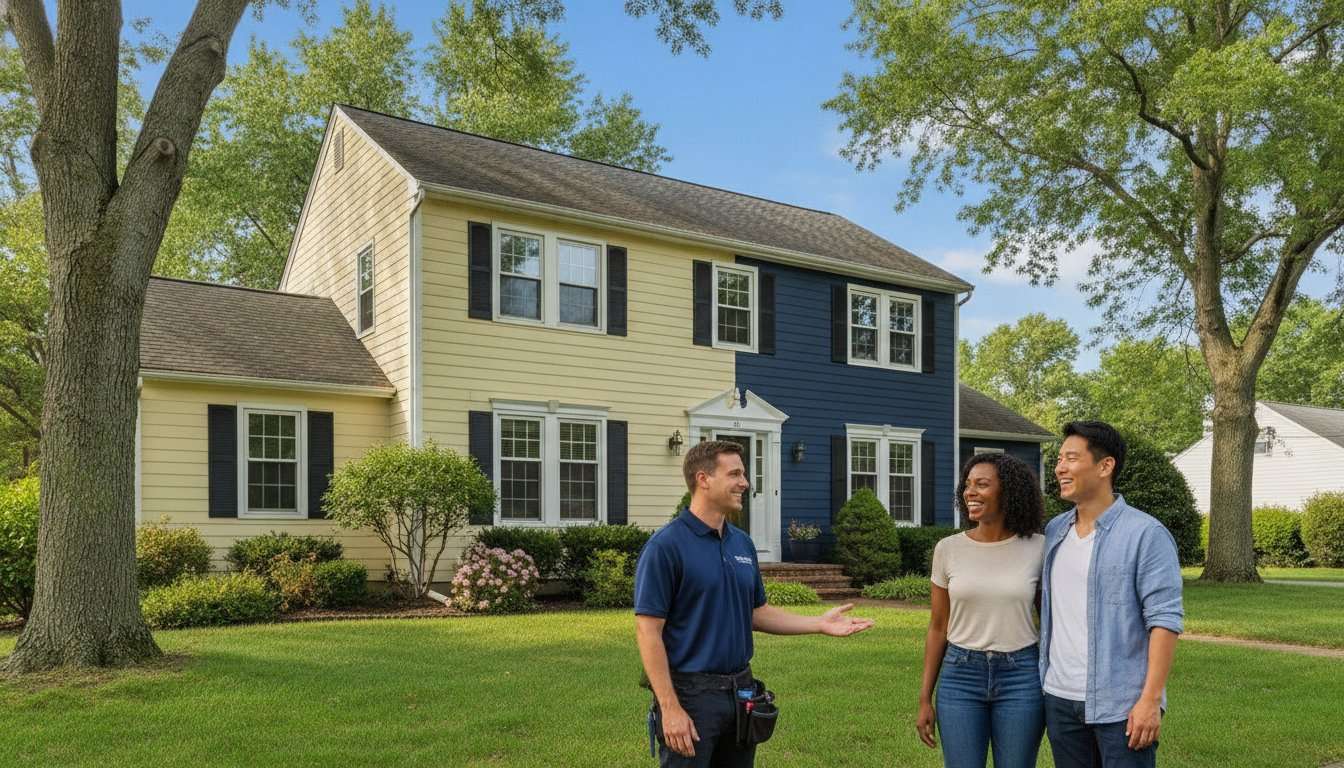
A professional vinyl siding replacement Nassau County isn’t a simple cosmetic overlay; it’s a methodical restoration of your home’s protective envelope. We approach every project with a structured, five-step process designed to eliminate the stress of home improvement. This begins with a detailed initial consultation where we utilize precision digital measurements of your exterior. These accurate readings ensure that material orders are exact, minimizing waste and ensuring a seamless fit for your specific architectural profile.
Once the project commences, our crews perform a comprehensive removal of your old cladding. We prioritize eco-friendly disposal, ensuring that failing wood or metal panels are handled responsibly. After the old layers are stripped away, we conduct a critical inspection of the underlying house wrap and sheathing. If we find any structural soft spots or moisture damage, we address them immediately. This ensures your new siding sits on a healthy, dry foundation. The installation then proceeds with the following precision steps:
- Insulation Integration: We apply high-performance insulation layers to create the thermal blanket discussed earlier.
- Panel Lock-In: Vinyl panels are installed using professional techniques that allow for natural expansion and contraction.
- Detail Work: We focus on the corners, soffits, and trim to ensure a cohesive, high-end look.
- Site Restoration: A final walkthrough and meticulous site cleanup ensure your property is left in pristine condition.
If you are ready to begin this transformation, you can schedule your professional consultation with our team today.
Navigating Nassau County Building Permits
Many homeowners are surprised to learn that full siding projects often require local approval. Requirements can vary significantly between the Town of Hempstead and the Town of North Hempstead, or within specific incorporated villages. As a family-owned business serving the area since 1969, we understand these local nuances. We handle the paperwork and permit filings for you, ensuring your project remains in full compliance with local zoning and HOA regulations. This proactive approach prevents costly delays or fines during the installation process.
The Importance of Proper Flashing and Capping
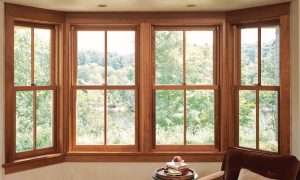
The most beautiful siding will fail if the joints aren’t secure. Precision aluminum capping around windows and doors is critical for creating a weatherproof seal. This custom-bent trim directs water away from your home’s interior, preventing infiltration at the most vulnerable points. While we are securing your exterior, it is often the ideal time to evaluate your Double Hung Windows to ensure your entire home is energy efficient and protected from the Atlantic climate.
Choosing a Trusted Nassau County Siding Contractor
Selecting the right partner for your home’s exterior is a decision that impacts your property’s value for decades. In a market often flooded with temporary contractors, the stability of a local, family-owned business provides unmatched peace of mind. A professional vinyl siding replacement Nassau County project requires more than just technical skill; it requires a deep understanding of the local climate and community standards. You deserve a contractor who views your home as a landmark in the neighborhood, not just another job site.
When you invite a contractor into your home, you shouldn’t feel pressured by aggressive sales tactics. There is a fundamental difference between a high-volume salesman and a seasoned consultant. A consultant views your project as a long-term partnership. They focus on the functional health of your home rather than just closing a deal. This approach ensures that you receive the right material specifications, such as ProVia siding, which is engineered for the specific humidity and wind loads of our island. Local references from your own neighborhood matter most because they serve as a living portfolio of a contractor’s work over time.
The Long Island Windows and Siding Legacy
Our roots in the community run deep. We’ve been serving Nassau County since 1969, building a legacy of consistent craftsmanship and reliability. Over these five decades, we’ve refined our process to alleviate the inherent stress of home improvement. By specializing in high-quality materials like ProVia vinyl siding, we ensure that every installation meets the highest standards of durability and aesthetic excellence. Our family-owned structure means that our name is on every project, and we take that responsibility seriously. We don’t rely on hype; we rely on a 50 year history of proven results.
Our Local Service Area and Communities
Our expertise extends across the diverse landscapes of Nassau. We provide expert vinyl siding replacement Nassau County services in central hubs like Garden City and Levittown, as well as coastal communities like Massapequa. Our crews are also frequently seen on the North Shore, enhancing homes in Great Neck and Port Washington with sophisticated, wood-grain finishes. We are proud to extend our professional reach to Valley Stream, Floral Park, and the surrounding neighborhoods, ensuring every homeowner has access to elite exterior solutions. Whether you live in a quiet cul-de-sac or on a busy main road, our team treats your property with the respect it deserves.
Local Service Areas
We are proud to provide expert siding and window services to residents and businesses throughout Long Island. Our primary service areas include:
- Nassau County: Garden City, Levittown, Massapequa, Great Neck, Port Washington, Valley Stream, Floral Park, Hempstead, and Oyster Bay.
- Suffolk County: Babylon, Islip, Brookhaven, Huntington, Smithtown, Babylon Village, Brightwaters, Huntington Bay, Patchogue, Port Jefferson, Sag Harbor, Bay Shore, Bayport, Blue Point, Bohemia, Brentwood, Centereach, Central Islip, Commack, Coram, Deer Park, Dix Hills, East Islip, East Northport, East Patchogue, Farmingville, Hauppauge, Holbrook, Holtsville, Huntington Station, Kings Park, Lake Ronkonkoma, Medford, Melville, Middle Island, Miller Place, Mount Sinai, Nesconset, North Babylon, Northport, Oakdale, Port Jefferson Station, Ridge, Rocky Point, Ronkonkoma, St. James, Sayville, Selden, Shirley, Sound Beach, Stony Brook, West Babylon, West Islip, West Sayville, and Yaphank.
Transforming Your Nassau County Home for the Future
Upgrading your home’s exterior is a significant step toward long-term peace of mind and enhanced property value. Throughout this guide, we’ve explored how a professional vinyl siding replacement Nassau County project provides a vital thermal blanket for your home, protecting it from Atlantic storms while lowering your monthly energy costs. You’ve seen that modern materials offer the prestigious look of natural wood without the burden of constant maintenance or the risk of moisture damage.
Choosing the right partner makes all the difference in achieving these results. At Long Island Windows and Siding, we bring a legacy of A+ Rated Professional Craftsmanship to every project. We’ve been family-owned and operated since 1969, and we take immense pride in our thousands of local Long Island references. We’re here to act as your friendly guide, ensuring your installation is seamless and rewarding from the first measurement to the final walkthrough.
Your home deserves an exterior that reflects its true potential and stands the test of time. We invite you to Schedule Your Free Nassau County Siding Consultation Today and take the first step toward a more beautiful, durable future for your family.
Common Questions About Nassau County Siding Projects
How much does vinyl siding replacement cost in Nassau County?
The total investment for your project depends on your home’s square footage, the number of stories, and the specific material grade you select. Factors like architectural complexity and the choice of contoured insulation backing also influence the final estimate. We provide a comprehensive, transparent breakdown after a precision digital measurement of your exterior to ensure there aren’t any surprises during the installation process.
How long does it take to replace the siding on a typical Long Island home?
Most siding projects are completed within one to two weeks, though the exact timeline depends on the size of your house and current weather conditions. This duration includes the careful removal of your old cladding, structural inspections, and the precision installation of your new panels. We prioritize a steady, methodical pace to ensure every corner and seal meets our high standards for craftsmanship.
Is vinyl siding better than wood for coastal homes?
Vinyl is often the superior choice for our coastal climate because it doesn’t rot, warp, or attract wood-boring insects. While traditional wood requires frequent painting and sealing to survive the salt air, modern vinyl remains vibrant and durable with almost no maintenance. It provides the authentic look of cedar grain without the constant labor or vulnerability to the Atlantic’s high humidity levels.
Do I need a permit for siding replacement in Nassau County?
Yes, most municipalities across the county require a building permit for a full siding replacement. Towns such as Hempstead and Oyster Bay have specific regulations to ensure that the work meets local safety and energy codes. As your local partner, we handle the entire permit application and filing process for you, ensuring your project remains in full compliance with all local ordinances.
Can I install new vinyl siding over my old siding?
We don’t recommend installing new panels over old materials, as this often traps moisture and hides existing structural damage. A professional vinyl siding replacement Nassau County project should always involve stripping the house back to the original sheathing. This allows us to inspect for rot, replace damaged wood, and install a fresh moisture barrier, ensuring a flat and secure foundation for your new exterior.
What is the best time of year to replace siding on Long Island?
Spring and autumn are the most popular seasons for installation due to the moderate temperatures which are ideal for material handling. However, our experienced crews perform installations year-round. We utilize specific techniques during the height of summer or the chill of winter to account for the natural expansion and contraction of the PVC panels, ensuring a perfect fit regardless of the season.
Does new siding really improve my home’s energy efficiency?
Modern siding significantly improves efficiency when paired with a high-quality foam insulation backing. This layer acts as a thermal blanket, wrapping your home to prevent heat from escaping through the wall studs, a process known as thermal bridging. By reducing the strain on your HVAC system, many homeowners notice a meaningful decrease in their monthly utility bills immediately after the upgrade is complete.
How long will my new vinyl siding last?
High-quality vinyl siding is engineered to last between 20 and 40 years when it’s installed by seasoned professionals. The longevity of the material is backed by advanced manufacturing processes that resist impact and UV degradation. When you choose a reputable contractor and premium products, your home remains protected and beautiful for decades, often outlasting the time most families spend in a single residence.